The Silent Risk in Modern Buildings: Why Life Safety Infrastructure Is Falling Behind
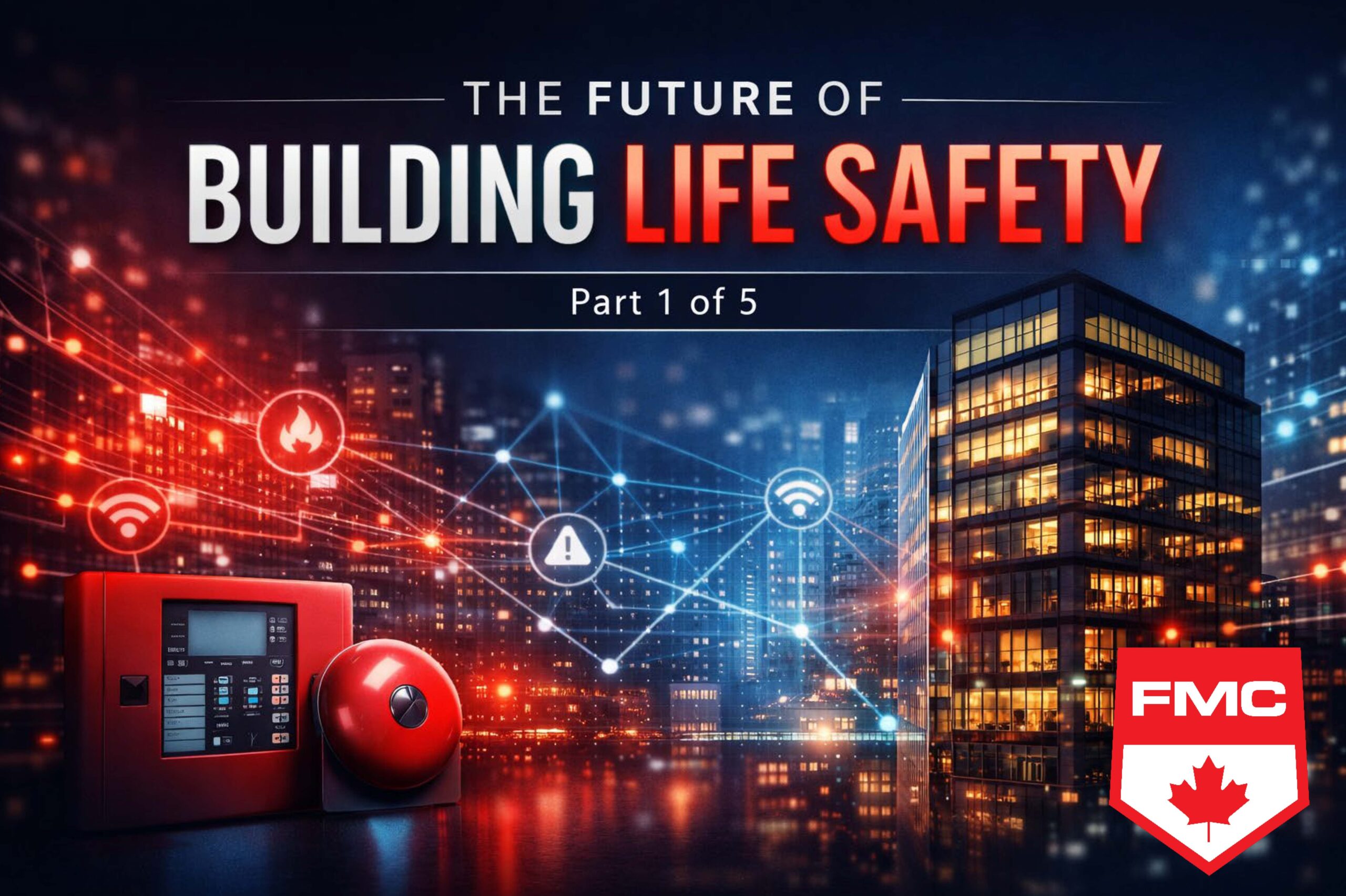
The Silent Risk in Modern Buildings: Why Life Safety Infrastructure in Ontario Is Falling Behind
Modern buildings are becoming smarter every year, but is building life safety in Ontario keeping up with the trend?
Access control systems now use mobile credentials. Security cameras provide AI-powered analytics. Building automation platforms manage everything from HVAC performance to energy optimization.
Yet in many cases, one of the most critical systems in the building — life safety — still relies on infrastructure designed decades ago.
This growing gap between modern building technology and legacy life safety infrastructure is creating a silent risk that many building owners, integrators, and property managers are only beginning to recognize.
This article launches our five-part series exploring the future of building life safety in Ontario, and why the industry must rethink how life safety systems operate in the modern built environment.
Modern Buildings Are More Complex Than Ever
Commercial buildings today are dramatically more complex than they were even twenty years ago.
A typical facility may now include:
- Integrated access control systems
- Network-based surveillance cameras
- Cloud-connected building automation
- Energy management platforms
- Remote facility monitoring
These systems generate large volumes of data and are designed to operate across modern digital networks.
However, the life safety systems protecting these buildings — particularly fire alarm signal transmission — often operate on legacy communication infrastructure that was never designed for today’s connected environment.
The Legacy Infrastructure Problem
Historically, fire alarm signals were transmitted using telephone lines and simple dial-up communication pathways.
While these systems served their purpose for many years, the expectations placed on life safety infrastructure have evolved significantly.
Today’s buildings require:
- Highly reliable signal delivery
- Redundant communication pathways
- Supervised network connectivity
- Rapid transmission of alarm signals
Many older monitoring approaches struggle to meet these modern expectations.
As buildings become more technologically advanced, relying on outdated signal transmission infrastructure can introduce unnecessary risk into the life safety chain.
Why Signal Delivery Reliability Matters
When a fire alarm activates, the signal must move through several critical steps:
- The alarm panel detects the event
- The signal is transmitted off-site
- A monitoring centre receives and processes the signal
- Emergency responders are notified
Every stage of this process depends on the reliability of the communication infrastructure connecting the building to the monitoring centre.
If that infrastructure fails, is delayed, or lacks proper supervision, the consequences can be serious.
This is why modern life safety systems increasingly rely on redundant communication pathways such as IP and cellular networks, providing multiple routes for signals to reach their destination.
Compliance Expectations Are Also Evolving
In Ontario, life safety monitoring systems are often expected to align with standards such as CAN-ULC-S561, which defines requirements for fire signal receiving centres and communication supervision.
These standards emphasize reliability, redundancy, and operational procedures designed to ensure alarm signals are processed quickly and consistently.
As regulators, insurers, and building consultants place increasing attention on life safety compliance, building owners are beginning to recognize that monitoring infrastructure plays a critical role in overall system performance.
Life Safety Can No Longer Be an Afterthought
For many years, life safety monitoring was viewed as a simple utility — a service that quietly operated in the background.
But as buildings become smarter and more connected, life safety systems must evolve alongside them.
The infrastructure responsible for transmitting alarm signals must now match the reliability, resilience, and intelligence of the modern building environment.
This shift represents one of the most important transformations currently happening in the life safety industry.
The Beginning of a New Era in Life Safety
Across North America, the life safety ecosystem is beginning to modernize.
New technologies are enabling:
- Redundant digital communication pathways
- Enhanced monitoring infrastructure
- Data-driven emergency response
- Better integration with modern building systems
These advancements are laying the foundation for the next generation of life safety platforms — systems designed not just to transmit alarms, but to support faster, more reliable emergency response.
For building owners, integrators, and consultants, understanding these changes is becoming increasingly important.
Next Week: The Evolution of Fire Alarm Signal Delivery
In the next article in this series, we will explore how fire alarm monitoring technology has evolved over the past several decades — from dial-up phone lines to modern IP and cellular communication networks.
Understanding this evolution helps explain why modern life safety infrastructure must continue to adapt to the needs of today’s buildings.
Part 2: From Dial-Up to Real-Time — The Evolution of Fire Alarm Signal Delivery
About Fire Monitoring of Canada
Fire Monitoring of Canada provides ULC-listed fire alarm monitoring and life safety services for commercial, institutional, and multi-residential buildings across Ontario.
Through modern monitoring infrastructure and the OPEN ACCESS™ platform, FMC supports faster, more reliable fire alarm signal delivery designed for today’s connected buildings.