What Happens in the First 60 Seconds After a Fire Alarm Activates?
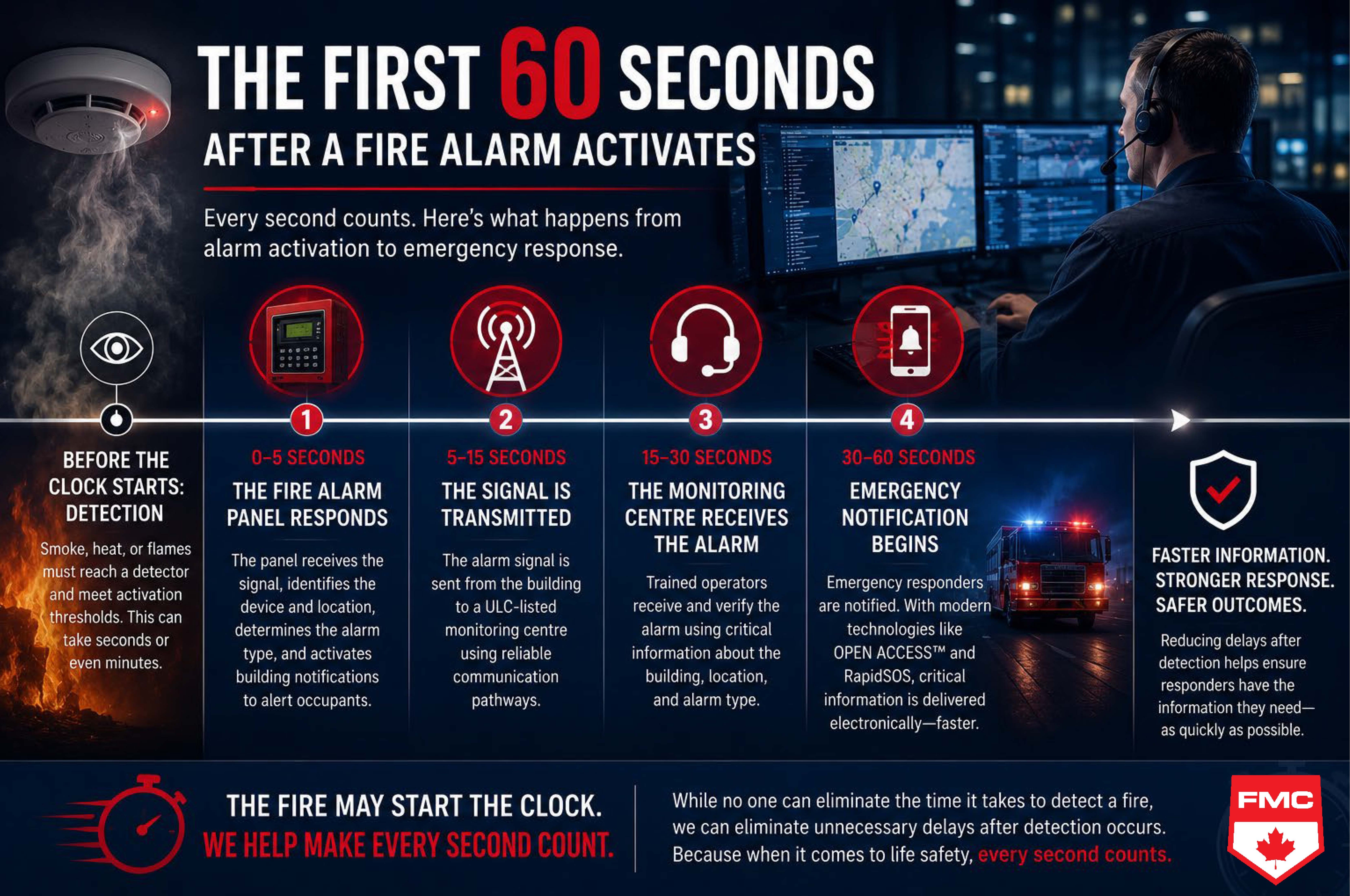
What Happens in the First 60 Seconds of a Fire Alarm?
When people think about a fire alarm, they often picture a smoke detector activating the moment a fire starts.
In reality, that’s not how most fires unfold.
Before a detector activates, smoke must travel to the device, heat must build to a specific threshold, or a sprinkler system must experience enough flow to trigger an alarm condition. Depending on the fire’s location, size, and growth rate, precious seconds—or even minutes—may pass before the alarm system ever receives its first indication that something is wrong.
That’s why what happens after detection is so important.
Once a fire alarm activates, every second counts.
Let’s look at what happens during the first 60 seconds after a fire alarm signal is generated.
Before the Clock Starts: Detection
Fire alarm systems are designed to detect signs of fire as early as possible, but no detection technology can identify a fire before physical conditions exist.
A detector must first sense:
- Smoke particles
- Heat accumulation
- Flame characteristics
- Water flow from a sprinkler system
- Manual activation from a pull station
Only after one of these events occurs does the fire alarm panel receive an alarm signal.
At that moment, the clock starts.
Seconds 0–5: The Fire Alarm Panel Responds
The fire alarm control panel receives the signal and immediately determines:
- The device that activated
- The location of the alarm
- The type of alarm event
At the same time, the system activates notification devices throughout the building, alerting occupants to begin evacuating safely.
Seconds 5–15: The Signal Is Transmitted
Modern fire alarm systems are designed to quickly transmit alarm information to a ULC-listed monitoring centre.
Depending on the system design, communications may occur through:
- Cellular networks
- IP communications
- Dual-path communications
- Dedicated life safety transmission technologies
The objective is simple: ensure alarm information leaves the building as quickly and reliably as possible.
Seconds 15–30: The Monitoring Centre Receives the Alarm
When the alarm reaches the monitoring centre, trained operators immediately begin processing the event.
The monitoring software provides critical information such as:
- Building address
- Account information
- Alarm type
- Zone or point information
- Emergency contact information
- Special response instructions
Every second saved during this stage helps reduce overall response time.
Seconds 30–60: Emergency Notification Begins
Once the alarm is processed, emergency response notifications begin, or so it should. As it was discovered in the Leber Rubes study tradition non-direct fire monitoring notifications took on average 114.8 seconds.
Traditionally, alarm information has been communicated through voice-based dispatch processes. While effective, these methods require valuable time for operators to verbally relay information.
Today, modern technologies such as OPEN ACCESS™ and RapidSOS allow alarm information to be delivered electronically to participating fire departments.
This means responders can receive critical incident information faster, including:
- Exact building location
- Alarm details
- Site information
- Additional emergency response data
By reducing communication delays, emergency responders gain access to information sooner and can begin preparing while en route.
Why Every Second Matters
The reality is that the fire may have already been developing before the alarm was ever activated.
Smoke must travel.
Heat must build.
Detection devices must reach their activation thresholds.
Because some time is inevitably spent reaching the point of detection, the industry must focus on reducing delays everywhere else in the emergency response chain.
That means:
- Faster alarm transmission
- Faster monitoring centre processing
- Faster emergency notification
- Faster delivery of information to responding agencies
Every improvement helps reduce the time between detection and response.
The Future of Emergency Communications
Fire alarm systems have evolved significantly over the past decade.
The goal isn’t simply faster technology.
The goal is helping firefighters receive better information, sooner, so they can make informed decisions when every moment matters.
Every Second Counts
Most occupants never see what happens behind the scenes after a fire alarm activates.
What they don’t see is a carefully coordinated chain of technology, communications, trained operators, and emergency responders all working together to protect lives and property.
At FMC, we believe every second matters. Because while no one can eliminate the time it takes to detect a fire, we can work to eliminate unnecessary delays after detection occurs.
That’s why we continue investing in technologies that help critical alarm information reach emergency responders quickly, accurately, and reliably.
Because when it comes to life safety, every second counts.