ULC Listed vs Non-ULC Fire Monitoring in Ontario
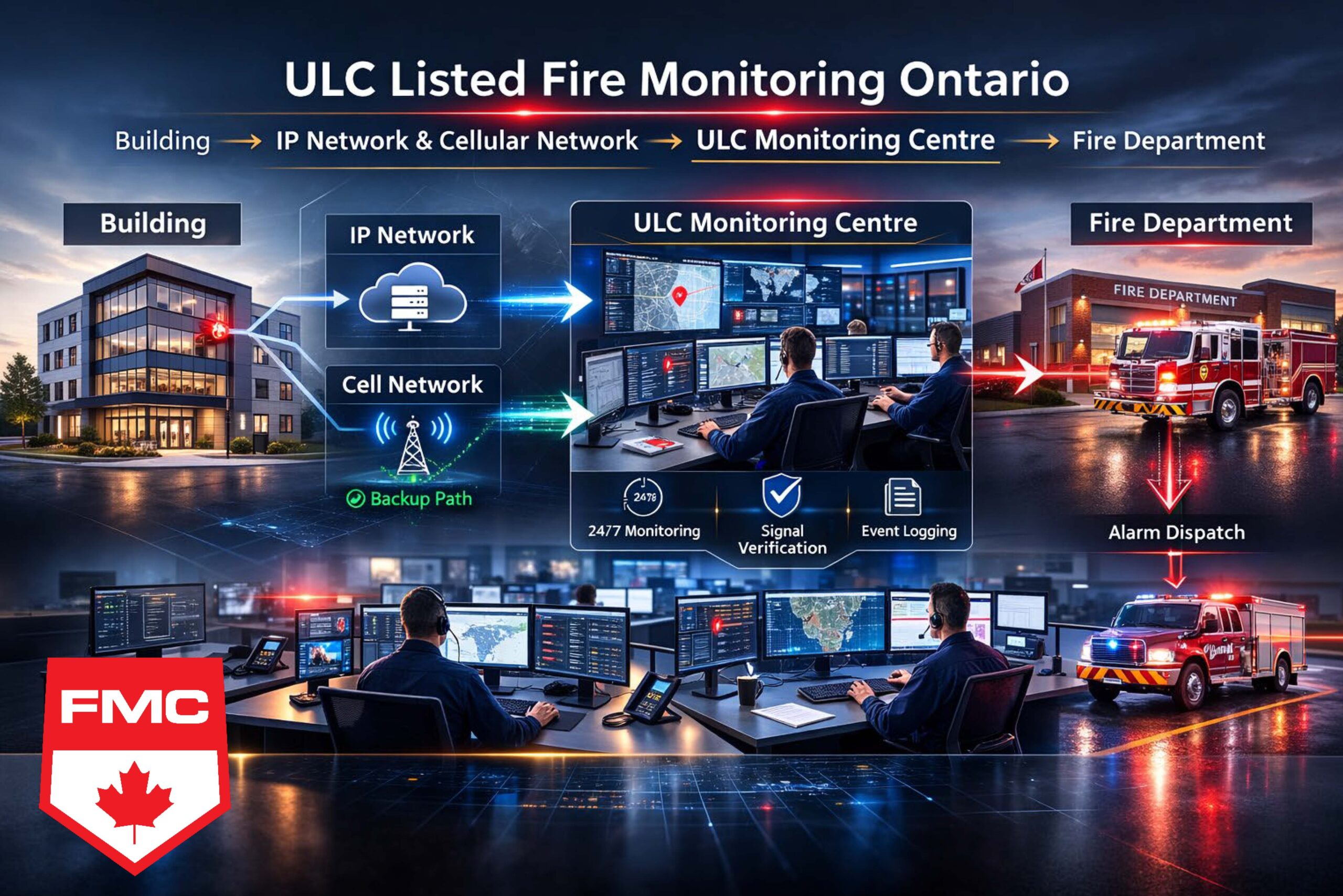
ULC Listed vs Non-ULC Fire Monitoring — What’s the Difference?
What Does “ULC Listed” Mean?
ULC (Underwriters Laboratories of Canada) develops standards that apply to life-safety systems, including fire alarm signal receiving and monitoring operations.
A ULC listed monitoring operation has demonstrated compliance with specific operational and technical standards. In the fire alarm monitoring space, this commonly relates to:
- Defined signal receiving and processing procedures
- Supervised transmission pathways
- Redundancy expectations
- Power backup requirements
- Documentation and event logging standards
- Periodic inspection or audit processes
ULC listing is intended to ensure that fire alarm signals are received and handled in a controlled, verifiable, and reliable manner.
What Is Non-ULC Fire Monitoring?
Non-ULC monitoring simply means the operation has not obtained or does not operate under ULC listing for fire alarm signal receiving.
That does not automatically mean the service is poor, but it does mean:
- There may be fewer documented standards governing operations
- Redundancy requirements may differ
- Audit and inspection frameworks may not apply
- Compliance alignment must be evaluated more carefully
In some occupancies or municipalities, non-ULC monitoring may not meet expectations set by the Authority Having Jurisdiction (AHJ) or insurance providers.
Why This Difference Matters in Ontario
In Ontario, fire alarm monitoring requirements are influenced by:
- The Ontario Fire Code
- Local AHJ interpretation and enforcement
- Insurance requirements
- Occupancy classification
Many commercial, institutional, and multi-residential occupancies require monitoring. When monitoring is required, stakeholders often expect alignment with recognized standards such as CAN-ULC-S561 and related ULC criteria.
Choosing a monitoring provider that does not align with recognized standards can create:
- Compliance questions during inspections
- Delays in occupancy approvals
- Insurance complications after a loss
- Increased legal exposure
Operational Differences: ULC vs Non-ULC Monitoring
Here are some of the typical areas where differences appear.
1. Signal Supervision
ULC-aligned monitoring typically requires supervised signal pathways. If communication fails, a trouble condition is generated and documented. This can be achieved by using Active Communication or Redundant Communication (see below).
Non-ULC setups may not always follow the same structured supervision framework.
2. Redundancy Expectations
In many compliant designs, dual-path communication (for example IP + cellular) is used to reduce single points of failure.
ULC listing often requires defined redundancy measures appropriate to the application.
Non-ULC systems may rely on a single communication path unless redundancy is specifically engineered.
3. Documentation & Event Logging
ULC environments operate under defined documentation and record-keeping expectations.
This matters when:
- AHJs request verification
- Insurance carriers review incident response
- Signal failures are investigated
Without structured documentation practices, proving compliance becomes more difficult.
4. Power Backup Requirements
ULC-aligned operations typically include defined standby power requirements to ensure signals continue to be received during power outages.
Non-ULC systems may vary in how backup systems are structured and documented.
5. Audit & Inspection Oversight
ULC listing is not a one-time label — it involves ongoing compliance verification.
This external oversight helps ensure standards are maintained over time.
Non-ULC monitoring may not be subject to the same third-party review processes.
Does Every Building Require ULC Listed Fire Monitoring in Ontario?
Not necessarily.
Whether ULC listing is required depends on:
- Occupancy type
- Fire Code requirements
- AHJ expectations
- Contractual or insurance stipulations
However, for many commercial and multi-residential buildings in Ontario, aligning with recognized ULC standards significantly reduces compliance risk.
Risk Considerations for Property Owners
From a liability standpoint, the key question is:
If a fire occurs, can you demonstrate that your monitoring arrangement met recognized compliance expectations?
ULC-listed monitoring can help provide:
- Defined operational standards
- Audit documentation
- Clear procedural records
- Reduced ambiguity in post-incident reviews
Non-ULC monitoring may require additional diligence to ensure equivalent compliance protections are in place.
Risk Considerations for Alarm Dealers & Integrators
Alarm dealers should recommend a monitoring partner that aligns with recognized standards helps:
- Reduce call-back and dispute risk
- Improve inspection outcomes
- Strengthen credibility with AHJs
- Support long-term client retention
When monitoring fails or compliance is questioned, the dealer relationship is often affected — even if the monitoring centre is separate.
Questions to Ask Any Monitoring Provider
Regardless of ULC listing status, ask:
- How are signal pathways supervised?
- Is dual-path communication used?
- What redundancy measures are in place?
- How are events logged and retained?
- How can you ensure that you meet the 30 second alarm delivery criteria?
- What documentation can be provided for AHJ review?
- What is the procedure during communication loss?
These answers reveal whether the operation is structured around compliance — or convenience.
Summary: ULC Listed vs Non-ULC Monitoring
ULC listed monitoring typically provides:
- Structured standards
- Defined supervision
- Redundancy alignment
- Ongoing verification
- Clear documentation
Non-ULC monitoring may still function effectively, but it requires careful evaluation to ensure it meets compliance and risk management expectations.
For many Ontario buildings, aligning with recognized standards is the most defensible path.
Request a Compliance Review
If you’re unsure whether your current monitoring setup aligns with the recognized compliance expectations, we can review your configuration and help identify potential gaps, documentation risks, and redundancy concerns.