Life Safety Data: The Next Frontier in Emergency Response
Life Safety Data: The Next Frontier in Emergency Response
In our previous article, From Dial-Up to Real-Time: The Evolution of Fire Alarm Signal Delivery, we explored how fire alarm monitoring has evolved from telephone-based dial-up communication to modern IP and cellular transmission. In today’s article, we’re going to examine the emerging impact of fire alarm data on emergency response.
We need to stress that the evolution of life safety systems does not stop with faster communication.
A new transformation is beginning to take shape — one where alarm systems deliver not just signals, but meaningful data.
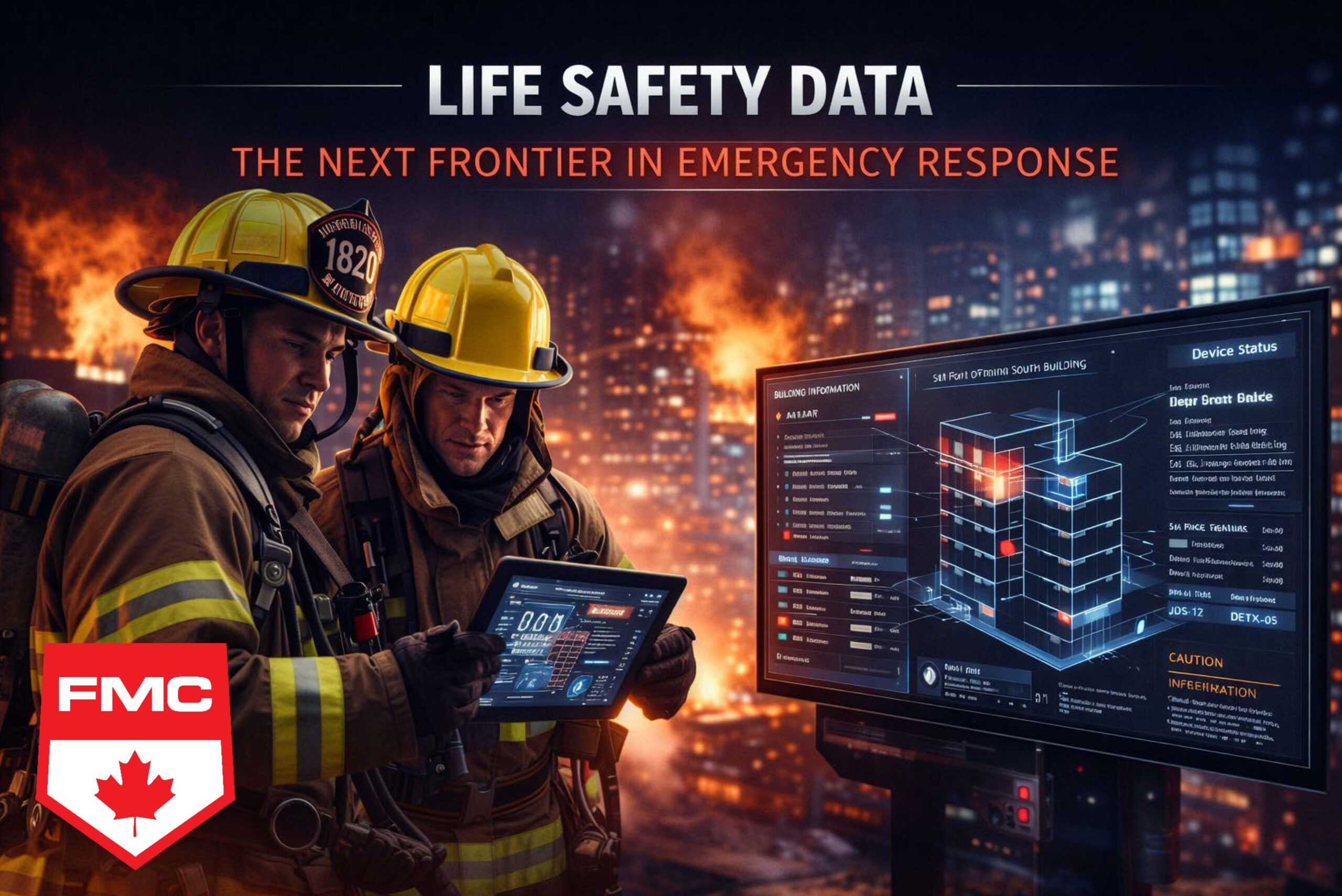
This shift toward data-enabled life safety systems could significantly improve how emergency responders understand and manage incidents when they arrive on scene.
The Traditional Alarm Signal
Historically, fire alarm systems transmitted relatively simple information.
When an alarm activated, the monitoring centre would typically receive basic data such as:
- The building location
- The alarm type (alarm, trouble, supervisory)
- The zone or device associated with the event in the case of intrusion systems (typically not for fire alarm monitoring)
While this information is essential, it often provides only a limited snapshot of what may actually be happening inside the building.
Firefighters responding to an alarm frequently arrive with very little situational awareness beyond the fact that a system has activated.
Why More Information Matters
Emergency response is a race against time.
The faster responders can understand the situation they are facing, the faster they can make critical decisions. That’s why fire alarm data improvement will help to facilitate emergency response.
In many cases, the first few minutes of an incident are the most important.
Providing responders with better information before they arrive can help them:
- Identify the likely location of the incident
- Understand building layout and occupancy risks
- Prepare appropriate equipment and response strategies
- Improve coordination between responding units
This is where modern life safety data begins to play an increasingly important role.
The Emergence of Data-Enabled Life Safety Systems
As buildings become more connected, life safety systems are beginning to generate significantly more operational data.
Modern building systems can provide information such as:
- Specific device activation points
- Detailed building floor plans
- System health and device status
- Integration with other building technologies
When structured and transmitted effectively, this information can provide emergency responders with valuable context before they even arrive on scene.
Supporting Better Situational Awareness
Imagine a scenario where responding crews have access to building intelligence that helps them understand:
- Which floor or area initiated the alarm
- The type of device that activated
- Whether other devices have triggered in sequence
- Potential hazards or system conditions inside the building
While alarm signals remain the primary trigger for emergency response, supplemental data can provide a clearer picture of what responders may encounter.
This additional situational awareness has the potential to improve response planning and operational safety.
The Role of Monitoring Infrastructure
Delivering life safety data reliably requires more than just advanced fire alarm panels.
The monitoring infrastructure responsible for receiving and transmitting signals must also be capable of supporting modern digital communication.
Robust monitoring platforms are increasingly designed to handle not only alarm signals, but structured building information that can assist emergency response workflows.
As this infrastructure continues to evolve, the ability to deliver meaningful life safety data will likely become a defining feature of next-generation monitoring systems.
Preparing for a More Connected Life Safety Ecosystem
The life safety industry is entering a new phase of innovation.
As building technology advances, the systems responsible for protecting occupants must evolve alongside them.
The shift from simple alarm transmission toward data-enabled life safety platforms represents one of the most significant developments currently shaping the industry.
For building owners, system integrators, and fire safety professionals, understanding this transformation will be increasingly important in the years ahead.
Next Week: Why Life Safety Must Integrate With Modern Buildings
While better data can enhance emergency response, another major shift is also taking place.
Many modern buildings are integrating security systems, access control platforms, and building automation technologies into unified digital environments.
Yet life safety systems are often still treated as standalone infrastructure.
In the next article in this series, we explore why life safety must integrate with modern building systems — and what that means for the future of building protection.
Part 4: The Connected Building — Why Life Safety Must Integrate With Security and Smart Systems
About Fire Monitoring of Canada
Fire Monitoring of Canada provides ULC-listed fire alarm monitoring and life safety services for commercial, institutional, and multi-residential buildings across Ontario.
Through modern monitoring infrastructure and the OPEN ACCESS™ platform, FMC supports faster, more reliable fire alarm signal delivery designed for today’s connected buildings.