Why Fire Alarm Cybersecurity Matters More Than Ever | FMC
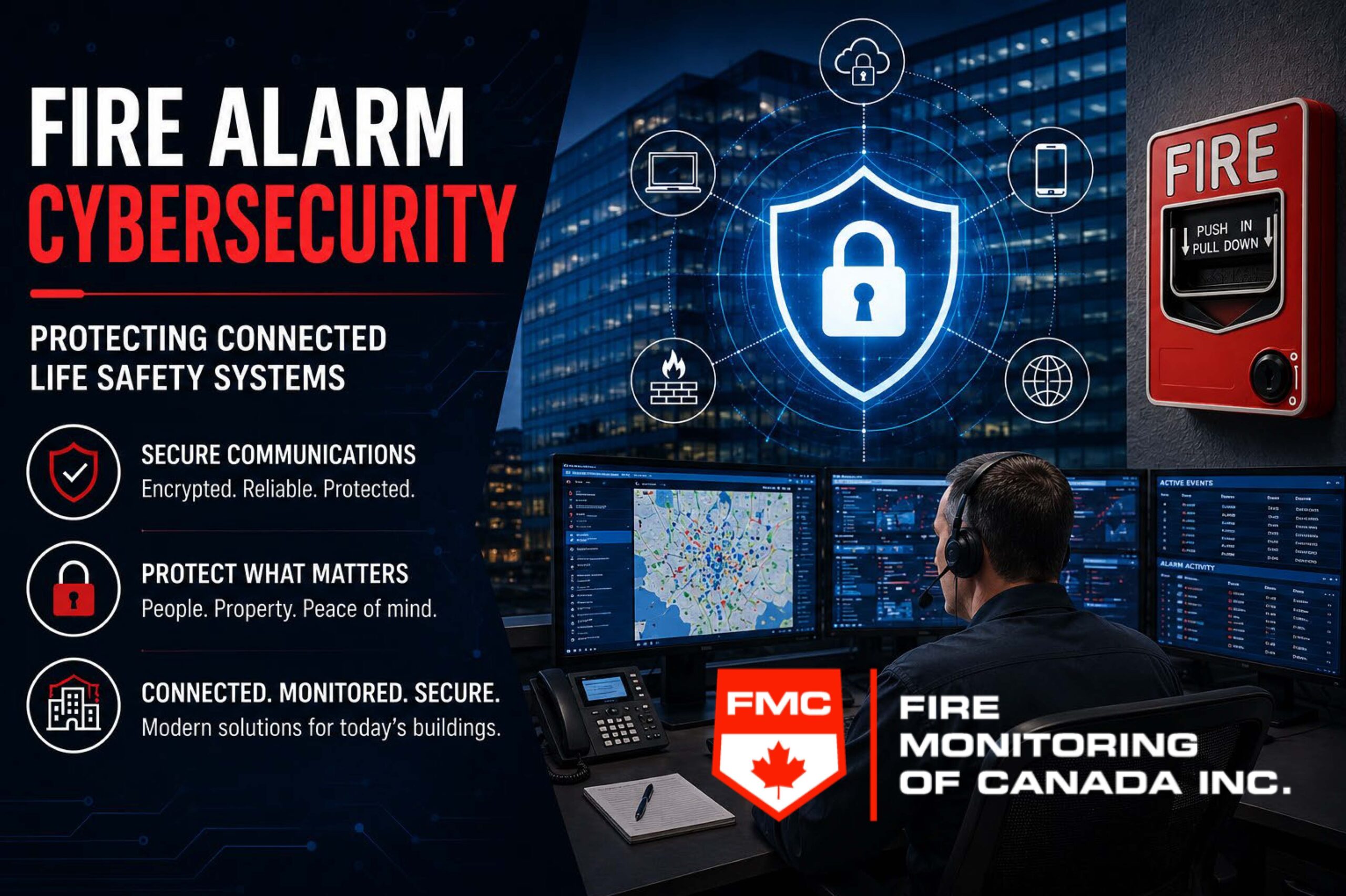
Why Fire Alarm Cybersecurity Matters More Than Ever
When most people think about cybersecurity, they think about computers, servers, email systems, or financial data. Rarely do they think about their fire alarm system.
However, today’s fire alarm systems are far different from those installed twenty years ago. Modern life safety systems are increasingly connected through IP networks, cellular communicators, cloud platforms, remote diagnostics, and monitoring centres. While these technologies provide tremendous benefits, they also introduce new cybersecurity considerations that building owners and property managers should understand.
Fire Alarm Systems Are No Longer Isolated
Historically, fire alarm systems operated independently from a building’s broader technology infrastructure. Today, many systems communicate through network connections, remote monitoring platforms, and integrated building management systems.
These advancements allow for:
- Faster alarm transmission
- Remote troubleshooting
- Improved system diagnostics
- Enhanced reporting and compliance documentation
- Better communication between monitoring centres and emergency responders
While these capabilities improve overall life safety performance, they also highlight the importance of maintaining secure communication pathways.
Why Cybersecurity Matters
A fire alarm system serves one critical purpose: protecting people and property during an emergency.
Any disruption to alarm communications, monitoring capabilities, or system functionality can create unnecessary risk.
Potential concerns may include:
- Unauthorized access to network-connected devices
- Compromised communication pathways
- Improper system configuration changes
- Delayed or interrupted alarm signal transmission
Although these situations remain uncommon, they reinforce the need for strong cybersecurity practices throughout a building’s life safety infrastructure.
What Building Owners Should Ask
Many property owners assume cybersecurity is solely an IT responsibility. In reality, life safety systems often require collaboration between building operators, IT teams, monitoring providers, and service companies.
Consider asking your provider:
- How are alarm signals transmitted?
- Are communications encrypted?
- How are remote connections secured?
- What cybersecurity measures are in place for monitoring services?
- How are software updates and system patches managed?
These conversations can help ensure your life safety systems remain both effective and secure.
The Importance of a Trusted Monitoring Partner
A monitoring provider should do more than simply receive alarm signals. They should also maintain secure communication pathways, follow industry best practices, and continuously evaluate emerging risks.
At FMC, we recognize that life safety technology continues to evolve. As systems become more connected, maintaining reliable and secure alarm communications becomes increasingly important. Our commitment is to help ensure alarm information reaches the right people, at the right time, through trusted and dependable communication channels.
Looking Ahead
Technology is transforming the life safety industry. The same innovations that improve response times, visibility, and operational efficiency also require greater attention to cybersecurity.
By working with knowledgeable partners and staying informed about emerging risks, building owners can ensure their fire alarm systems continue to provide the protection they were designed to deliver.
Because when it comes to life safety, reliability matters—and so does security.