Construction & Renovation Season: Protect Your Fire Alarm System During Building Projects
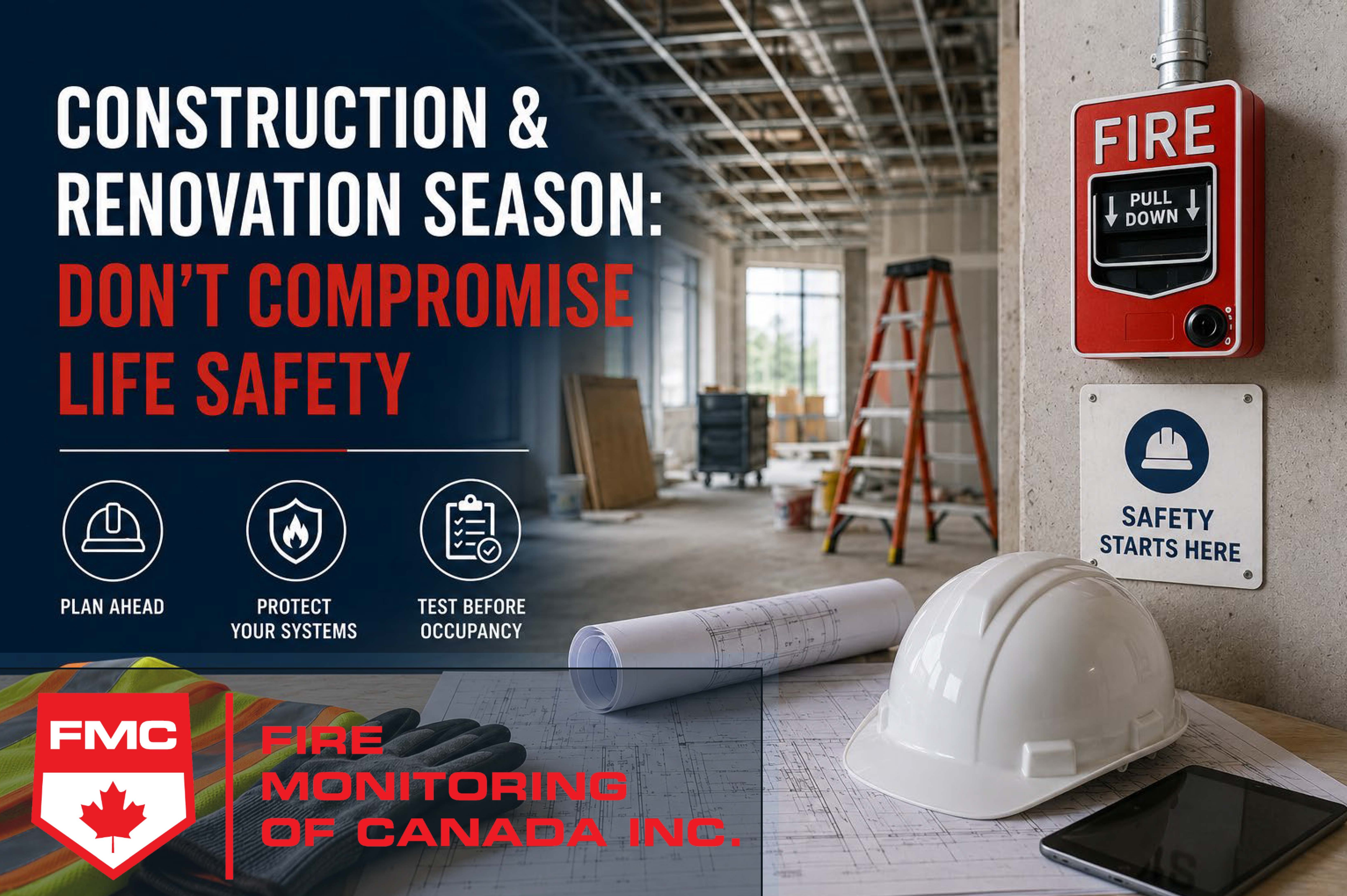
Construction & Renovation Season: Don’t Let Building Improvements Compromise Life Safety
Every summer, businesses, property managers, schools, and condominium corporations take advantage of the warmer weather to complete renovations, upgrades, and maintenance projects. Whether it’s replacing ceilings, renovating office space, upgrading HVAC systems, or expanding a facility, construction season is an exciting time for improving your property. Unfortunately, it’s also one of the most common times for life safety systems to be accidentally compromised. Let’s focus on how we can improve construction fire safety.
At Fire Monitoring of Canada (FMC), we’ve seen firsthand how seemingly routine construction work can leave buildings vulnerable to fire, security, and life safety risks. Before your next renovation begins, here are a few important considerations to help keep your building—and its occupants—protected.
1. Never Disable a Fire Alarm System Without a Plan
Construction activities often generate dust, heat, or smoke that can trigger fire alarm devices. While it may be tempting to disable portions of the system to avoid nuisance alarms, doing so without proper procedures can leave your building unprotected.
If your fire alarm system must be placed on test or temporarily impaired:
- Notify your monitoring station before work begins.
- Coordinate with your fire alarm service provider.
- Ensure all parties understand when protection has been restored.
- Follow all applicable fire code requirements and impairment procedures.
Remember, a fire doesn’t wait until construction is complete.
2. Protect Smoke Detectors During Dust-Producing Work
Drywall sanding, concrete cutting, ceiling tile replacement, and demolition create fine dust that can contaminate smoke detectors.
Contaminated detectors may:
- Trigger false alarms.
- Become less sensitive to real fires.
- Require cleaning or replacement.
Using manufacturer-approved protective covers during construction—and removing them immediately once work is complete—helps protect your detection devices while ensuring they return to service as intended.
3. Don’t Forget About Security Systems
Contractors may need access to areas that are normally secured. Temporary access can introduce new risks if security systems aren’t adjusted properly.
Consider:
- Updating temporary access credentials.
- Ensuring doors and gates remain monitored.
- Confirming cameras still provide clear coverage after renovations.
- Re-testing intrusion devices that may have been moved.
Even a relocated wall can create unexpected blind spots for cameras or motion detectors.
4. Changes to the Building Can Affect Detection
Adding offices, moving walls, or installing new equipment can change how smoke and heat move throughout a building.
After renovations are complete, it’s important to confirm that:
- Smoke detectors remain properly located.
- Heat detectors are still appropriate for the space.
- Notification appliances remain visible and audible.
- Fire alarm devices haven’t been blocked by new construction.
Life safety systems are designed around the building’s layout. When the building changes, the protection should be reviewed as well.
5. Test Everything Before Occupancy
Before employees, tenants, or customers return to newly renovated areas, ensure all life safety systems have been inspected and tested.
This includes:
- Fire alarm devices.
- Monitoring communications.
- Sprinkler supervisory devices.
- Door releases and magnetic holders.
- Emergency lighting where applicable.
- Access control integration.
A successful renovation isn’t complete until the building is once again fully protected.
6. Every Second Counts During an Emergency
Even with the best planning, emergencies can still happen.
That’s why rapid alarm transmission is critical.
FMC’s OPEN ACCESS™ platform electronically delivers fire alarm information directly through RapidSOS to participating fire departments in approximately one second, helping reduce delays between alarm activation and emergency notification. When every second matters, fast and reliable alarm delivery helps emergency responders begin their response sooner.
Construction Season Safety Checklist
Before your project begins, ask yourself:
- Have we notified our monitoring station of any planned impairments?
- Have smoke detectors been protected from dust?
- Have contractors been briefed on fire alarm procedures?
- Will cameras and intrusion devices continue to provide proper coverage?
- Have all systems been tested before the renovated area is occupied?
We’re Here to Help
Renovations should improve your building—not increase your risk.
Whether you’re planning a small office remodel or a large commercial renovation, FMC can help ensure your fire monitoring, intrusion, environmental monitoring, and life safety systems continue protecting your property throughout every stage of the project.
Planning renovations this summer? Contact Fire Monitoring of Canada before work begins. A short conversation today can help prevent costly issues tomorrow.