Metadata in Video Surveillance: The Buzzword That’s Actually Changing Everything
Metadata in Video Surveillance: The Buzzword That’s Actually Changing Everything
Walk into any conversation about modern video surveillance today and you’ll hear one word repeated over and over: Metadata. In this blog we are going to explain metadata in video surveillance, and why it’s important to understand its impact.
Metadata: It’s become a buzzword—but unlike many industry terms, this one actually matters.
Because metadata isn’t just a feature. It’s the reason video surveillance is finally becoming intelligent.
Let’s break it down in plain terms—and more importantly, what it means for the average person responsible for safety, security, or operations.
What Is Metadata (Really)?
At its simplest:
Metadata is data about data.
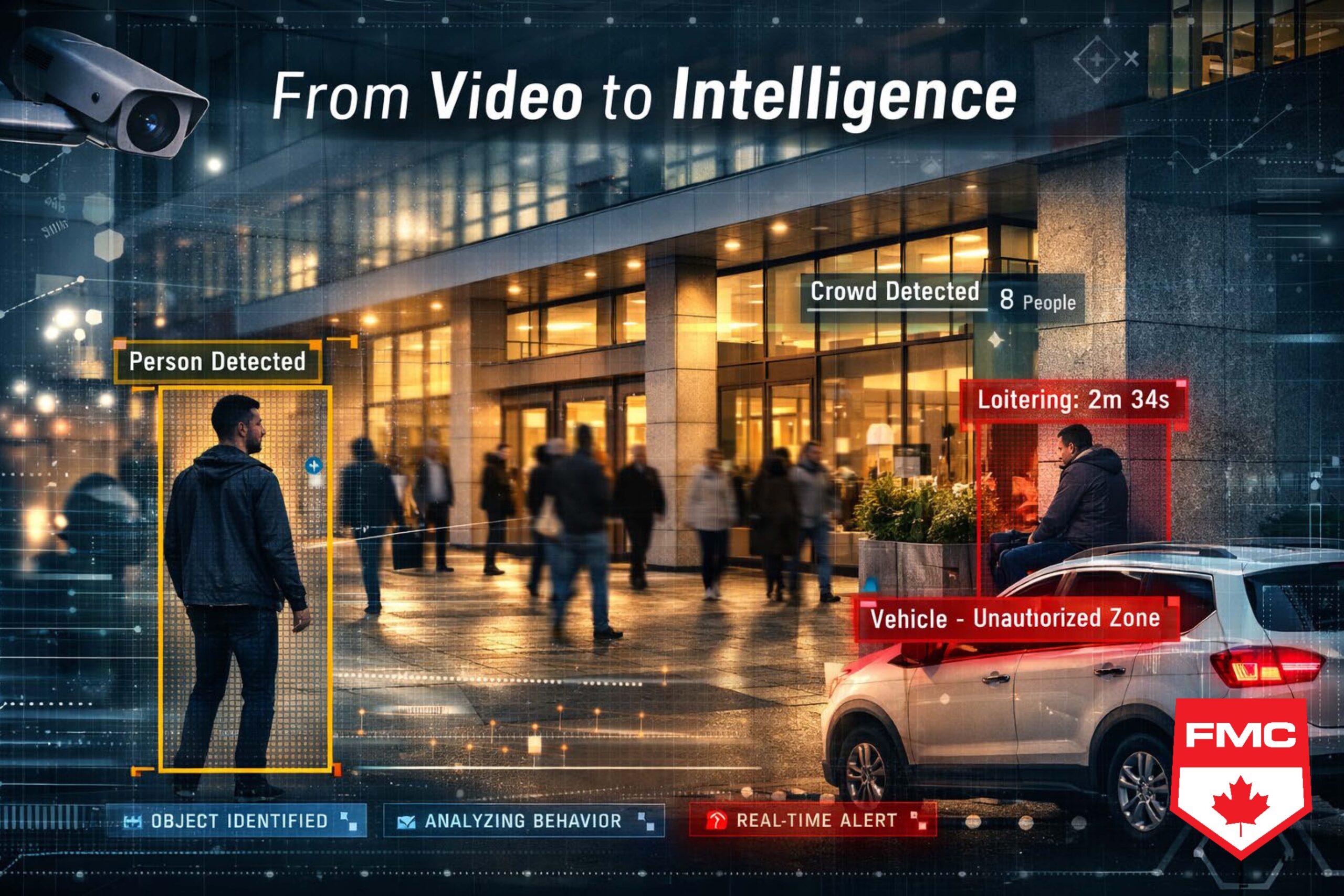
In video surveillance, that means instead of just recording video, the system is describing what’s happening inside the video.
For example, instead of storing:
- “Camera 12 footage at 2:14 PM”
Metadata allows the system to store:
- Person detected
- Red vehicle entered parking lot
- Object left behind near entrance
- Motion detected in restricted area after hours
So instead of just video, you now have searchable, structured information about that video.
Why Metadata Changes Everything
Traditional video systems forced humans to do the work:
- Watch footage
- Scan timelines
- Try to spot incidents manually
Metadata flips that model.
Now the system does the watching, and humans only respond when it matters.
What this enables:
1. Search Instead of Scrubbing
You can now search video like Google:
- “Person wearing black hoodie”
- “Vehicle in loading dock between 2–3 PM”
- “Motion in Zone 4 after midnight”
That’s not just convenient—it’s operationally transformative.
2. Real-Time Decision Making
Metadata allows systems to:
- Detect events as they happen
- Classify them
- Trigger actions instantly
Examples:
- Alert when someone enters a restricted area
- Notify when a crowd forms beyond a threshold
- Trigger an alarm when a vehicle stops in a no-parking zone
This is where surveillance shifts from forensics → prevention.
3. Reduced False Alarms
Older systems triggered alerts based on simple motion.
Metadata allows systems to distinguish:
- Person vs. shadow
- Vehicle vs. animal
- Normal behavior vs. anomaly
That means:
- Fewer nuisance alarms
- Faster response to real events
- Greater trust in the system
4. Context-Aware Analytics
Metadata enables systems to understand context, not just movement.
For example:
- A person entering a store at 2 PM = normal
- A person entering the same store at 2 AM = alert
Same action. Different context. That’s the power of metadata-driven intelligence.
What’s Actually Happening Behind the Scenes
Modern cameras and video management systems are now using:
- AI / deep learning models
- Object recognition
- Behavior analysis
- Pattern detection
These systems don’t just detect motion—they:
- Identify objects (person, vehicle, bike)
- Track movement paths
- Understand dwell time
- Recognize unusual patterns
All of that gets converted into metadata tags attached to video footage.
What This Means for Real-Time Alarm Actioning
This is where it becomes highly relevant to life safety and monitoring.
Metadata allows systems to trigger alarms based on meaningful events, not just activity.
Instead of:
- Motion detected
You now get:
- Person loitering at rear entrance for 3+ minutes
- Unauthorized vehicle in restricted fire lane
- Crowd forming near emergency exit
That means monitoring environments can:
- Prioritize true events
- Reduce dispatch fatigue
- Improve response accuracy
- Integrate with downstream emergency response systems
How This Compares to 5 Years Ago
Let’s be honest—what we called “analytics” five years ago was limited.
Then (≈ 2018–2020):
- Motion detection zones
- Basic line crossing
- Pixel-based change detection
- High false alarm rates
- Minimal object understanding
The system could tell you:
“Something changed.”
But not:
“What changed—or whether it mattered.”
Now:
- Object classification (person, vehicle, animal)
- Attribute detection (color, direction, speed)
- Behavior analysis (loitering, intrusion, anomaly)
- Searchable metadata across all footage
- AI-driven filtering of noise
The system can now tell you:
“A person entered a restricted area and stayed longer than expected.”
That’s a completely different level of intelligence.
Why This Matters to the Average Customer
For most businesses, property managers, or authorities having jurisdiction (AHJs), this isn’t about technology—it’s about outcomes:
- Faster incident response
- Better situational awareness
- Reduced liability
- Stronger compliance posture
- More efficient use of staff and monitoring resources
And most importantly:
It turns video from a passive recording tool into an active protection system.
The Bottom Line
Metadata isn’t just a buzzword—it’s the foundation of modern surveillance.
It’s what allows systems to:
- Understand what they’re seeing
- Communicate what matters
- Trigger action in real time
And as these systems continue to evolve, the gap between:
- Recording video
- Protecting people and property
…will only continue to widen.
Leading the Next Evolution of Life Safety
At Fire Monitoring of Canada Inc. (FMC), we’ve always believed that staying ahead of the curve isn’t optional in life safety—it’s a responsibility.
Just as we’ve taken a leadership position in ULC-compliant fire monitoring and signal delivery through OPEN ACCESS™, we are applying that same forward-thinking approach to the evolution of video surveillance.
The rise of metadata-driven analytics isn’t just a trend—it’s a shift in how systems detect, interpret, and respond to risk in real time.
And as this technology continues to mature, FMC is committed to:
- Understanding it
- Applying it responsibly
- Integrating it into life safety workflows where it adds real value
Because the future of protection isn’t about more data.
It’s about smarter, faster, and more actionable intelligence—delivered when it matters most.
Connect with Our Team
If you’re exploring how modern video surveillance and metadata-driven analytics can enhance your current systems—or how they align with your broader life safety strategy—our Consultative Sales Team is here to help.
We’ll work with you to evaluate the right approach based on your environment, risk profile, and compliance requirements.