Measuring What Matters: What Our Customers Told Us When Things Went Wrong
Measuring What Matters: What Our Customers Told Us When Things Went Wrong
In the life-safety and security industry, measuring installation success is relatively straightforward. A customer requests an upgrade, an integrator scopes the project, pulls wire, commissions panels, and hands over a clean, modern system. The client is investing in improvement, momentum is positive, and the deliverable is tangible.
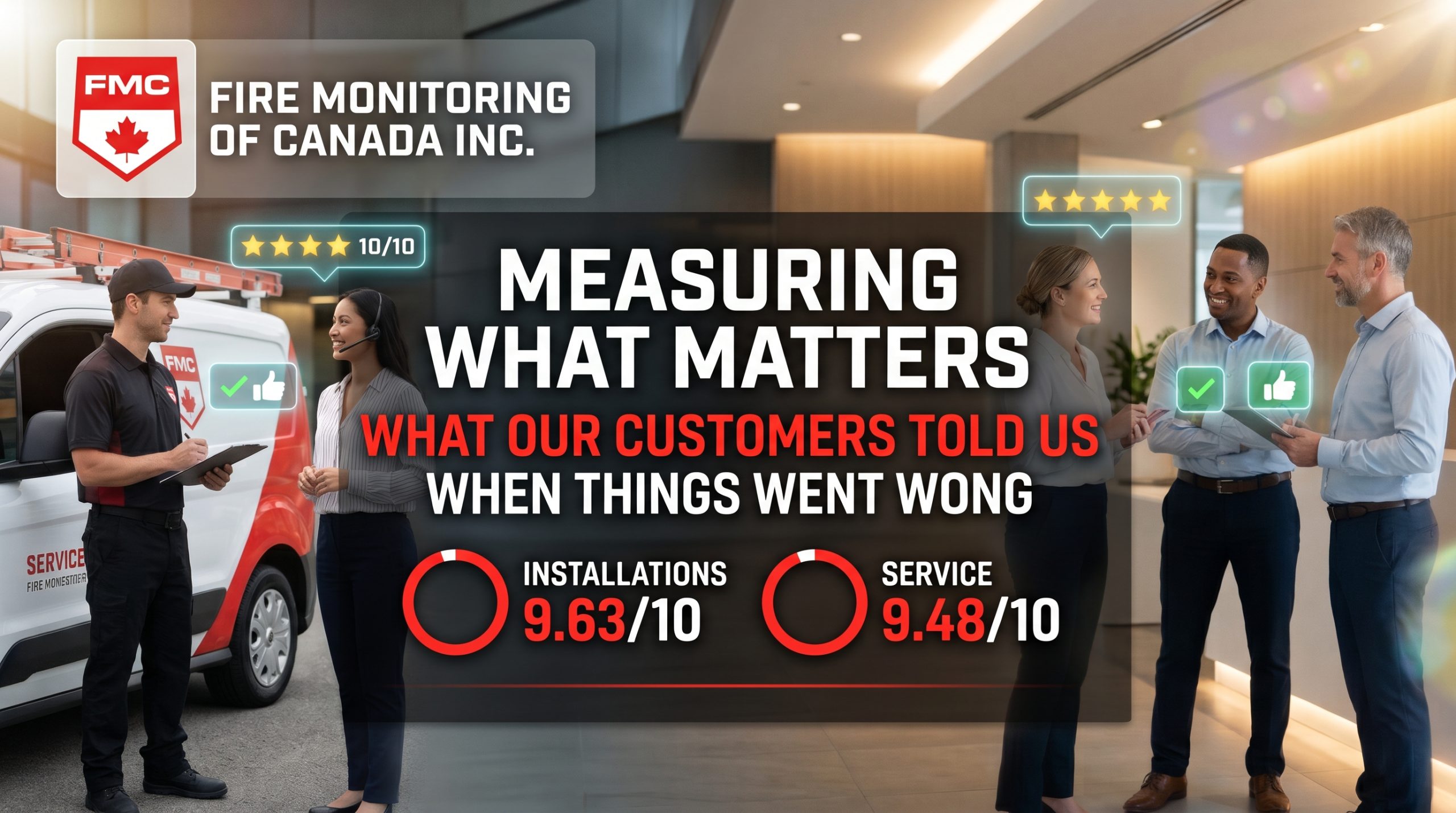
Years ago, when we rolled out our post-installation customer survey program at Fire Monitoring of Canada Inc. (FMC), the numbers validated our team’s craftsmanship: an influx of 10/10 scores, an established long-term average of 9.63 out of 10, and immediate manager follow-ups on the rare occasion something missed the mark.
We were proud of that baseline. But two years ago, we decided to point that same measurement lens at a far more unforgiving side of our business: on-demand service calls.
To be candid, doing so came with real internal hesitation.
Why Measuring Service Calls Felt Like a Risk
Installation happens on planned timelines. Service calls happen when things break.
When a client calls for unexpected service, it is because their normal operations have been interrupted. A critical door lock is malfunctioning, a supervisory switch is reporting an unexpected trouble condition, or an environmental spike triggered a false alarm at 2:00 AM.
Service is inherently reactive, stressful, and driven by disruption:
- The baseline mood is already compromised: Nobody budgets for an unexpected equipment failure during a busy workday.
- Human nature skews toward vocal frustration: In customer service research, it is well documented that clients are significantly more motivated to leave feedback after a negative disruption than after a smooth resolution.
- Complex diagnostics bring uncertainty: Unlike installing fresh cable, troubleshooting legacy infrastructure or intermittent field faults can reveal deeper, unexpected building wiring issues outside anyone’s immediate control.
We were accustomed to receiving steady streams of positive installation reviews. Exposing our brand to post-dispatch surveys under high-stress operating conditions felt like asking for lower ratings.
We did it anyway. Because in life safety, your reputation isn’t built when systems work as planned—it is proven when things go sideways.
The Verdict: 22 Months and 9.48 Out of 10
Over the past 22 months of surveying our service call dispatches across commercial, industrial, institutional, and residential facilities, the numbers delivered a clear verdict:
| Operational Metric | Scope of Work | Customer Rating Average |
|---|---|---|
| Installation Surveys | Planned upgrades, new system rollouts, panel commissioning | 9.63 / 10 |
| Service Call Surveys (Past 22 Months) | Emergency dispatches, troubleshooting, environmental & hardware repairs | 9.48 / 10 |
Achieving a 9.48 out of 10 across nearly two years of reactive service calls affirmed an essential principle: property managers and facility operators don’t penalize an integrator for unexpected hardware failures—they judge an integrator on communication, response velocity, and technical transparency.
When a technician arrives on site on time, diagnoses a complex ground fault without finger-pointing, explains the root cause clearly, and leaves the building fully protected before leaving the property, the customer’s relief outweighs the initial frustration of the breakdown.
Accountability Doesn’t End at High Scores
Numbers alone don’t preserve service quality; the process behind them does.
- Closed-loop escalation: When an installation or service call scores below our expectations, the ticket doesn’t sit in a database. It triggers a direct follow-up from a service manager to understand what broke down—whether it was scheduling communication, parts availability, or onsite coordination—and rectify it immediately.
- Field training feedback: Customer comments flow directly back to our field technicians and dispatchers, connecting operational reviews to everyday training.
- Process transparency: Honest metrics keep everyone aligned, eliminating assumptions about how our team performs once our trucks leave your loading dock.
Is Your Current Life-Safety Partner Measuring Up?
When evaluating a life-safety and security partner, don’t just ask about their installation portfolio or the brands they carry. Ask them how they measure their emergency response and repair performance—and ask what happens when a call doesn’t go smoothly.
At Fire Monitoring of Canada, our service expectations begin and end with building operational resilience that our customers can independently verify.
If you are reviewing your property’s life-safety, fire alarm monitoring, or integrated access control systems and want a partner held to verified customer standards, reach out to our team today. We welcome the opportunity to service your systems—and we look forward to earning your feedback on the experience.