Security Canada Central 2026: Key Industry Trends
Security Canada Central 2026: Integration, Innovation, and the People Driving Our Industry Forward
FMC’s reflections on the Monitoring Symposium and Security Canada Central in Toronto
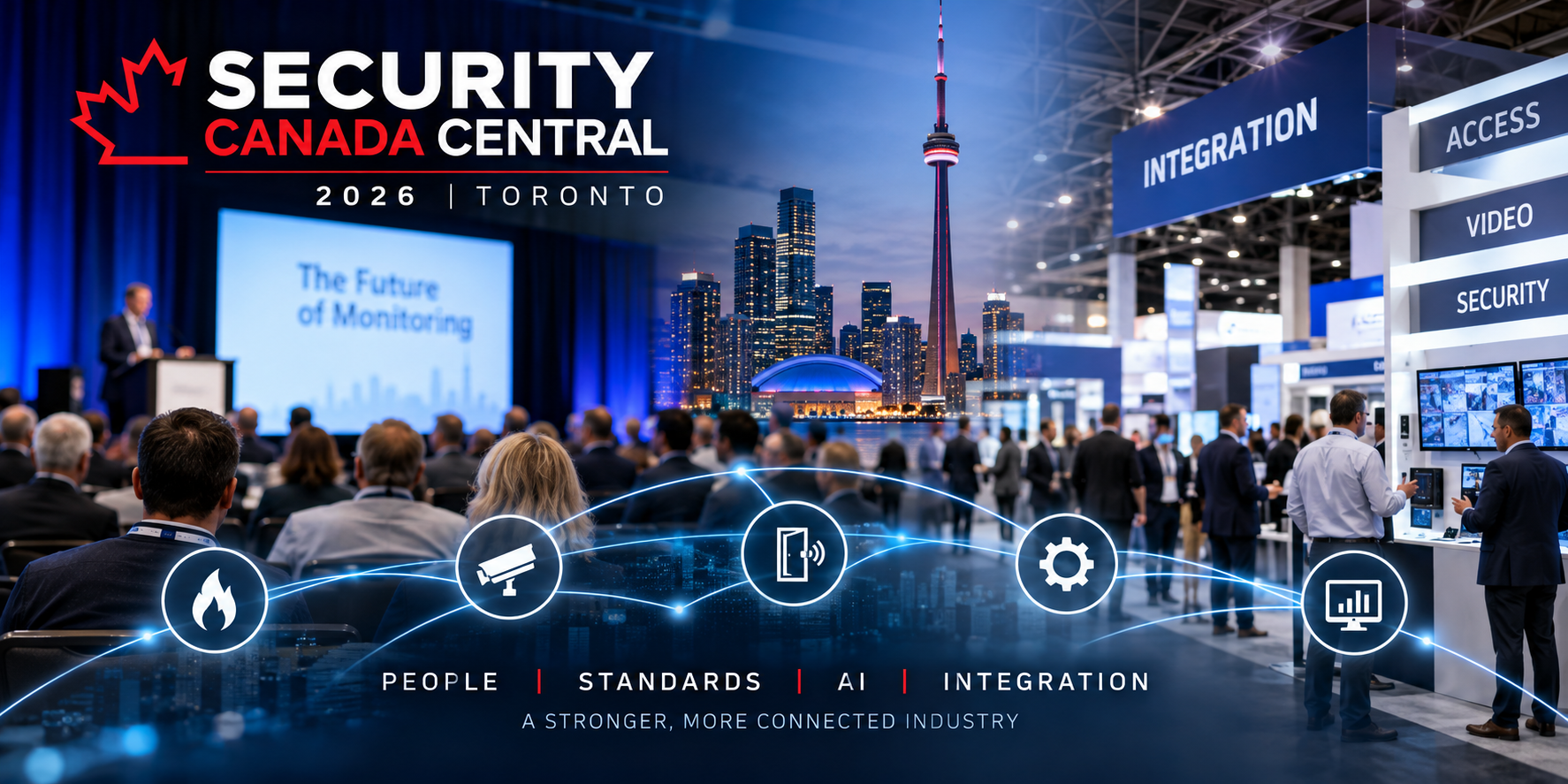
Last week, members of the Fire Monitoring of Canada (FMC) team recently attended Security Canada Central 2026 in Toronto, joining industry colleagues, manufacturers, technology partners, and fellow CANASA members for two days of education, collaboration, and discussion about the future of the security and life-safety industry.
While there was plenty of exciting technology on display, we came away with two particularly important observations: the continued evolution of the people and practices behind professional monitoring, and the growing emphasis on integration and interoperability across security and life-safety technologies.
The Monitoring Symposium: Investing in the Future of Monitoring
Our experience began with the Monitoring Symposium, which brought together monitoring professionals from across Canada, along with several of our American colleagues who contributed valuable perspectives and experiences.
The symposium offered an excellent balance of industry leadership, emerging technology, regulatory developments, and practical operational discussions.
Company Culture and Leadership
Justin Bailey, President of Becklar Monitoring, led a discussion on company culture, reinforcing the importance of the people behind our monitoring operations.
As technology continues to advance, attracting, developing, and retaining talented professionals remains fundamental to delivering exceptional service. Strong organizational culture and effective leadership are essential to building monitoring teams capable of adapting to an evolving industry.
Evolving Standards and Regulatory Considerations
Andrea Gilders presented on developments involving the proposed UL 8555 standard for auxiliary service providers and its relationship to UL/ULC standards and NFPA 72.
These discussions are particularly relevant as our industry considers how evolving technologies, service providers, and monitoring practices fit within established regulatory and life-safety frameworks.
Artificial Intelligence in Monitoring
Sascha Kylau, President of Jadugar AI, explored artificial intelligence in monitoring, a subject that continues to generate considerable interest across our industry.
AI presents opportunities to improve efficiency, support monitoring professionals, and potentially transform how monitoring centres process, prioritize, and respond to information.
As these capabilities develop, balancing innovation with reliability, accountability, and the critical role of trained monitoring professionals will remain essential.
Learning Through Industry Collaboration
Beyond the presentations, breakout sessions provided an opportunity for participants to exchange ideas on several important operational topics, including:
- Scheduling and workforce management
- Technology integrations
- Career development and professional growth
- Leadership and management practices
One of the most valuable aspects of the symposium was the willingness of CANASA members to openly share their experiences, challenges, and approaches. The participation of our American colleagues added another dimension to those conversations.
The takeaway was clear: advancing our industry requires more than new technology. It requires investment in people, thoughtful leadership, collaboration, and a willingness to learn from one another.
The Trade Show: Integration Takes Centre Stage
The following day, we attended the Security Canada Central trade show and educational sessions.
As expected, manufacturers showcased advancements across video surveillance, access control, intrusion detection, and other electronic security and life-safety technologies.
There were certainly impressive developments within individual product lines. However, what stood out to our team wasn’t simply what each manufacturer’s products could do independently.
It was how those products were being designed to work together.
Integration was a recurring theme throughout the show.
Manufacturers demonstrated how their own technologies could operate within a unified environment, connecting access control, video surveillance, security, and other building systems to provide a more complete solution.
Perhaps more interestingly, we observed a growing emphasis on integration with products from other manufacturers.
Through application programming interfaces (APIs), strategic partnerships, and increasingly open integration capabilities, manufacturers are recognizing the value of allowing their technologies to participate in broader ecosystems.
From Closed Ecosystems to Collaborative Integration
For years, manufacturers have worked toward creating comprehensive ecosystems built around their own product portfolios. That approach continues, and there are clear advantages to systems designed to work seamlessly within a single manufacturer’s environment.
However, we believe the industry is increasingly recognizing that customers, integrators, and projects don’t always fit neatly within one manufacturer’s ecosystem.
A building may benefit from one manufacturer’s video technology, another’s access control platform, and a different solution for intrusion detection or monitoring.
Rather than requiring customers to choose one ecosystem exclusively, manufacturers appear increasingly willing to ensure their products can work within multiple environments.
This is an important shift.
Manufacturers still want to be central to the solution, but they also recognize that restricting integration opportunities could mean excluding themselves from projects altogether.
For integrators like FMC, this evolution is encouraging.
It provides greater flexibility to design solutions around the needs of our customers rather than the limitations of any one manufacturer’s product portfolio.
It also reinforces the importance of selecting technology partners who are committed not only to product innovation, but also to interoperability, long-term compatibility, and collaboration.
What This Means for FMC and Our Customers
At Fire Monitoring of Canada, we see integration as much more than a convenience.
When properly designed and implemented, connected systems can improve operational efficiency, enhance situational awareness, and provide more useful information to the people responsible for protecting buildings and their occupants.
This philosophy is also reflected in our work with OPEN ACCESS™, where we are focused on improving the flow of critical fire alarm information between professional monitoring centres and fire department computer-aided dispatch systems.
Whether we’re discussing integrated building security systems or the exchange of critical information between monitoring centres and emergency responders, the underlying principle is similar:
The value of technology increases when the right systems can communicate effectively and deliver the right information to the right people.
Of course, greater connectivity also brings increased responsibility. Cybersecurity, system reliability, appropriate access controls, and ongoing support must remain central considerations as integration becomes more widespread.
Successful integration is not simply about connecting technologies. It is about ensuring those connections are secure, reliable, purposeful, and capable of delivering measurable value.
Looking Ahead: The Future of Security and Life-Safety Technology
Security Canada Central 2026 reinforced that our industry is advancing on several fronts simultaneously.
Technology is becoming more capable. Artificial intelligence is creating new possibilities. Industry standards continue to evolve. Manufacturers are finding new ways to collaborate. And monitoring organizations are continuing to invest in their people and leadership.
For our team, the most encouraging aspect of the event was the combination of innovation and collaboration.
We appreciate CANASA, the presenters, participating manufacturers, and our fellow industry professionals for the opportunity to exchange ideas and perspectives.
We look forward to continuing these conversations and applying what we’ve learned as we help our customers navigate an increasingly connected security and life-safety environment.
The future of our industry isn’t just about building better products. It’s about building better connections — between technologies, organizations, and people.
Partner with Fire Monitoring of Canada
Looking to integrate your building’s security and life-safety technologies?
Fire Monitoring of Canada provides professional fire monitoring, electronic security, video surveillance, access control, and integrated life-safety solutions for commercial, industrial, and institutional properties throughout Ontario.