Your Life-Safety Integrator Is Now Part of Your Cybersecurity Strategy
Your Life-Safety Integrator Is Now Part of Your Cybersecurity Strategy
For decades, choosing a security or life-safety integrator meant evaluating their ability to protect your people and property.
Can they design the right system? Can they install it properly? Will they respond when something goes wrong? Can you trust them with the security and life safety of your building?
Today, there is another question that belongs on that list:
Can you trust them with your cybersecurity?
I recently attended the Securing the Future event in Toronto, and cybersecurity was a recurring theme throughout the keynote presentations and panel discussions.
What stood out wasn’t simply that cybersecurity is becoming more important. We already know that.
What stood out was who was talking about it.
Security leaders representing major REITs and property management organizations were discussing cybersecurity as an integral part of their physical security strategy. One recurring concern was particularly important: as more building systems become connected, organizations need to carefully consider how many potential access points they are creating into their buildings and networks.
That is an important conversation for our industry.
The Connected Building Has Changed Security
Modern buildings are increasingly connected.
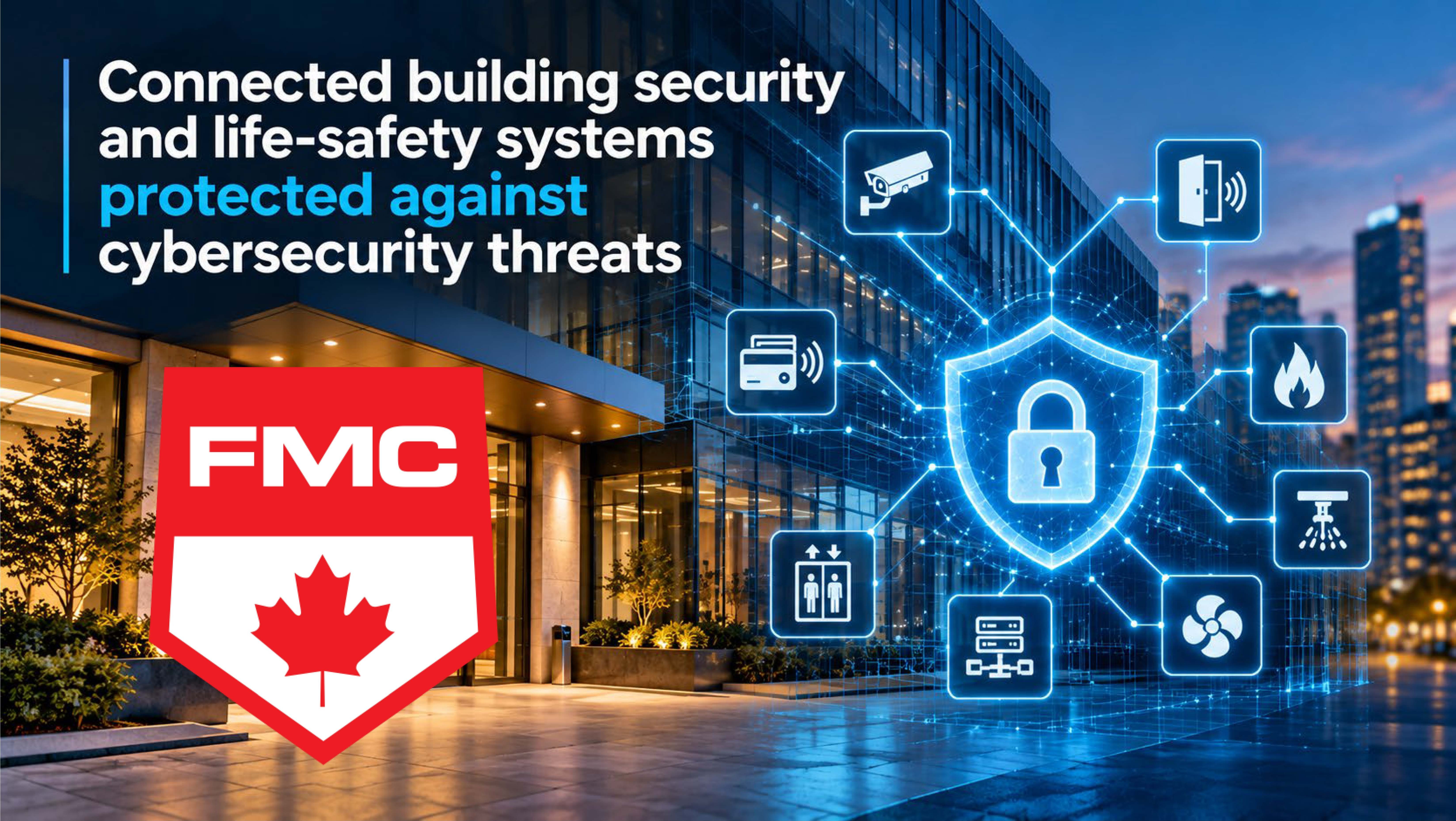
Video surveillance systems communicate across networks. Access control systems connect doors, credentials and databases. Intercoms, intrusion systems, fire alarm systems, monitoring equipment, building automation and other technologies increasingly communicate digitally.
The benefits are significant.
Integration can provide better situational awareness, faster access to information, remote management, improved analytics and more effective emergency response.
But every connection also deserves scrutiny.
Every device connected to a network, every remote connection, every integration between systems and every third party that is provided access represents something that must be properly designed, managed and protected.
This creates an interesting challenge.
For years, our industry has been focused on connecting systems.
Now we also need to become exceptionally good at deciding how, when and why they should be connected.
More Integration Isn’t Automatically Better Integration
There has been a tremendous push toward the “single pane of glass.”
Video, access control, intrusion, analytics and other systems can increasingly be brought together into unified platforms.
That can be incredibly valuable.
But integration should never simply mean connecting everything because we can.
Before creating another connection between systems, we should be asking:
- Does this connection provide meaningful operational or life-safety value?
- What information actually needs to pass between the systems?
- Who needs access?
- How is that access authenticated and controlled?
- Can privileges be limited to only what is required?
- How is remote access managed?
- How are software and firmware updates handled?
- What happens when a manufacturer identifies a vulnerability?
- Who is responsible for maintaining the cybersecurity of the system five or ten years after installation?
Those questions can no longer belong exclusively to the customer’s IT department.
They also belong to us.
The Role of the Integrator Has Changed
At Fire Monitoring of Canada, we believe this changes the responsibility of companies like ours.
An integrator isn’t simply installing cameras, card readers, alarm panels and communicators anymore.
We are deploying connected technology inside our customers’ buildings.
That means the decisions we make matter.
The products we recommend matter.
The manufacturers we partner with matter.
The way systems are configured matters.
And the way those systems are maintained throughout their lifecycle matters.
Our customers should expect us to understand that responsibility.
It also means choosing technology partners based on more than features and price. We need manufacturers that take cybersecurity seriously, maintain their products, respond to vulnerabilities, provide appropriate security controls and recognize that their equipment may ultimately reside on networks containing far more than security equipment.
Cybersecurity needs to become part of the product-selection process, not something considered after the installation.
Life Safety Is Becoming a Cybersecurity Conversation Too
This discussion extends beyond traditional security systems.
Fire alarm and life-safety technology is becoming increasingly connected as well.
Modern alarm communications can utilize IP and cellular networks. Monitoring centres depend on sophisticated software and communications infrastructure. Building systems exchange information. Remote access and cloud services are increasingly common.
The industry’s codes and standards are beginning to reflect that reality.
The 2025 edition of NFPA 72, National Fire Alarm and Signaling Code, contains specific cybersecurity provisions addressing cybersecurity risk assessment for fire alarm and signaling systems.
That is an important development.
A cyber incident affecting a business system can create a significant operational problem.
A cyber incident that impairs a security or life-safety system can potentially become something much more serious.
Our responsibility must therefore extend beyond protecting systems from traditional physical threats.
We need to think about protecting the integrity, availability and security of the systems themselves.
Fewer Doors for Attackers to Walk Through
There is a simple physical-security principle that translates remarkably well to cybersecurity.
If you were securing a building, you wouldn’t install fifty exterior doors when five properly controlled entrances would accomplish the same objective.
Every unnecessary entrance creates another point that needs to be protected.
Connected systems deserve similar thinking.
That doesn’t mean avoiding integration. Quite the opposite. Intelligent integration can dramatically improve security and life-safety operations.
It means being deliberate about connectivity.
- Connect what provides value.
- Segment where appropriate.
- Limit permissions.
- Control remote access.
- Maintain systems.
- Keep software and firmware current.
- Select responsible technology partners.
- Understand exactly who and what has access to critical systems.
The objective isn’t necessarily to build a building with no connections.
It is to build one with no unnecessary connections.
Trust Has a New Meaning
For more than 35 years, customers have trusted Fire Monitoring of Canada to help protect their people, properties and businesses.
That trust increasingly has another dimension.
Customers aren’t only trusting us to make sure their security and life-safety systems work.
They’re trusting us to ensure that the technology we introduce into their environments doesn’t unnecessarily introduce new risk.
That is a responsibility we take seriously.
We believe the security and life-safety integrators of the future need to become trusted partners in three areas:
Life Safety. Physical Security. Cybersecurity.
Those disciplines are no longer completely separate.
The buildings we protect are becoming more connected. The systems inside them are becoming more intelligent. And the potential consequences of getting cybersecurity wrong are becoming greater.
Our industry has spent decades protecting the doors into our customers’ buildings.
Now we need to pay just as much attention to the digital doors we’re installing inside them.
At FMC, that’s increasingly part of what being a trusted life-safety partner means.